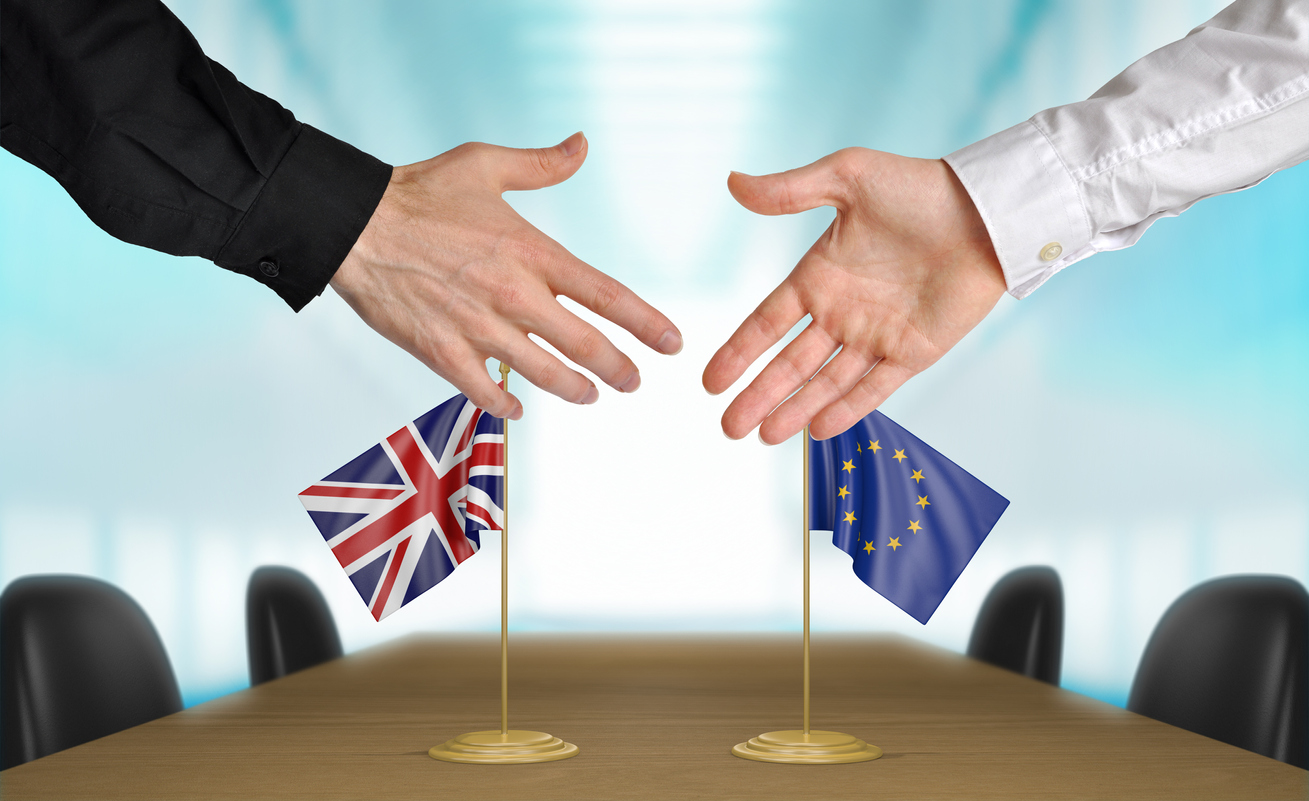
With a whirlwind of British politics taking place right under our eyes, the British public is being continuously asked and ever more confused by the shifting parameters of a process they have no control over. The Brexit paralysis is Britain’s biggest challenge of the status quo since WW2, and has asked the British public on how we view ourselves in relation to the European union.
Is Free Trade Under Threat?
With the passing of the G7 summit, a gap in the normally linear liberal order was exposed. A disjointed front over climate change, Brexit and the international order, based on liberalist principles seemed omnipresent in Biarritz. Ultimately, the core liberal ideals that interweave the member countries still presided, at least at the moment, with many dignitaries from across the globe attending (except Russia and China of course).
The EU is determined against having it’s core values challenged by the Brexit movement.
Yet under Brexit, to think that the EU would loose it’s 2nd largest economy to those questioning the very fundamental basis of the EU’s existence. Expect it to be tough, but would the UK really stop buying German cars or French wine? With both the UK and German economies slowing, it would be a foolish move to expect customers to pay more in tarrifs for EU goods.
To think that an ‘advanced and versatile’ UK economy couldn’t survive outside the EU would be a foolish idea. An economy can survive outside the European Union and in the long term it may be somewhat beneficial to us to form trade deals. However, we would need to have some form of trade agreement as soon as we leave the EU to avoid an immediate blocking of trade.
While it’s fair to say the parameters of leaving the EU have somewhat changed over the years, a no-deal exit would reverse the post-cold war trend of open borders, liberal trade regulations and anti-protectionism. Indeed, one can argue that these procedures have severely harmed UK manufacturing in the post World War environment, yet a reversal on the liberal economic system can bring the possibility of short-term unintended consequences.
‘Sucker-Punch Politics’
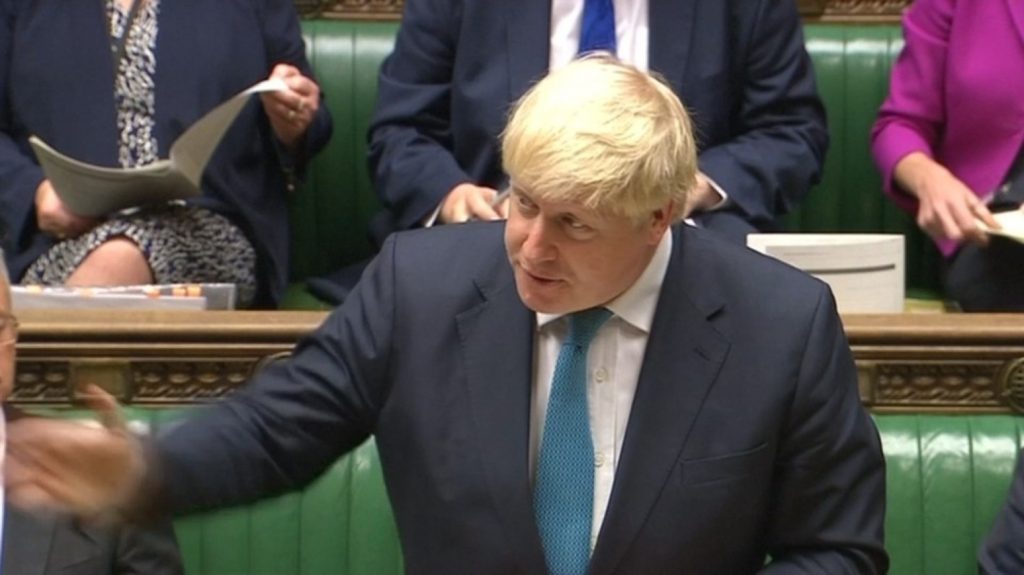
Today the House of Commons, the premier Boris Johnson uses the language of ‘Never Surrender’ and ‘Big Girl’s Blouse’ with an explicit intention to attract the middle aged voter to his camp – the ‘plane Jane’ or ‘the average Joe’, seemingly fed up with the humdrum of the indecisive politicians. The time is right for the kind of polarised politicians never seen in a political chamber that has, in the past been seen as innocuous by many commentators. Now, with the discourse changing to that reminiscent of World War II, the polarisation is set to change British politics as we know.
The battle between the executive and the chambers of Parliament will showcase the strength of so-called ‘checks and balances’, it only feeds into the minds of the public that politics is broken, with lack of trust the order of the day. Indeed, the idiom ‘a leopard can change it’s spots’ is all too familiar to suit the needs of the political elite, the electorate has come to know this well.
With a frustrated electorate, British politics is at its choke-point. It’s either do-or-die for many in the political class.
There is nonetheless a sense of dying urgency on the national level. If a consensus cannot be found with the current government, this can result in a fundamental shift for British politics, unseen if ever before. The Westminster government is now all very willing to test game theory on Europe, hoping they will bend under the threat of the supposed ‘economic doomsday’ of a no-deal Brexit.
Brexit has opened up a fundamental split in peoples consciousness – Whether the voter resonates more with a British identity or a European values based identity.
On the other side of the fence, the likes of Green Party leader Caroline Lucas has seen putting a gendered perspective on Brexit.
Smart Borders – Smart Brexit
Northern Ireland is the ultimate break on the camels back for the whole Brexit process… The positive news is that both parties have a consensus to avoid a ‘hard border’, which will risk the long term stability of Northern Ireland and end the Good Friday Agreement. The EU proposed ‘backstop’ effectively leaves Northern Ireland under the same jurisdictions (single market and customs union) as the EU, isolating them from mainland UK. The hard to swallow part is that it would need EU approval to change, something that arguably undercuts UK sovereignty over the whole Brexit process.
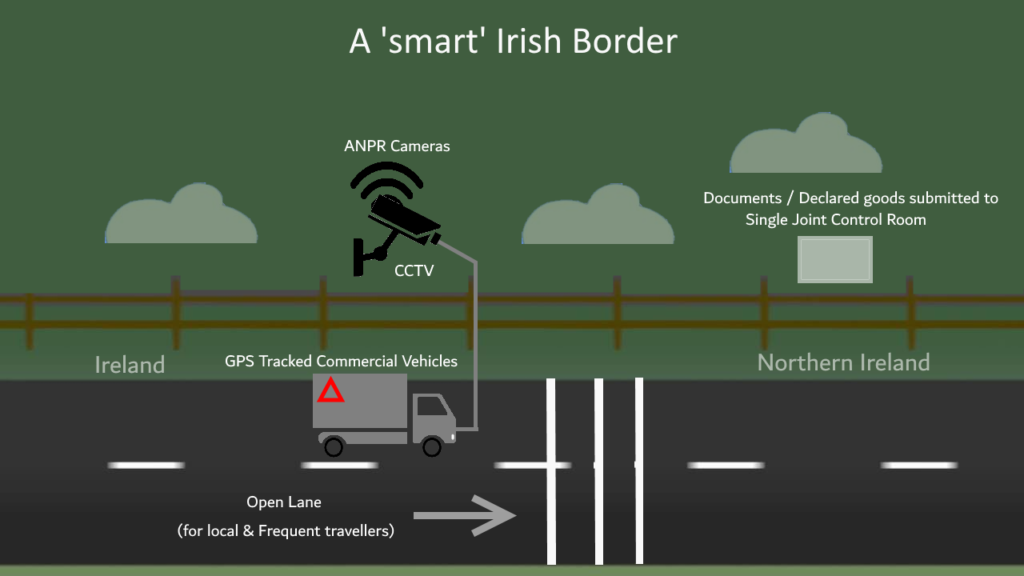
One solution drawn up by Westminster and various thinktanks is a variant of a ‘smart border’, an example animation is shown below.
A ‘Smart Border’ would effectively put technologies never before tested on international boundaries to the test. Number plate recognition (ANPR) and CCTV would be used and monitored through by a single control room, which would manage a simple customs declaration. Another suggestion is by using mobile phone technology to track vehicles through the border, creating a near ‘frictionless trade’.
The question remains weather this plan will be confined to the backrooms of thinktanks, or become London’s main playing card for solving the upcoming Northern Ireland border crisis.
Nevertheless the plan has yet to even be agreed upon by Brussels, who see it as much too clunky and fear that such a pours border, will create a ‘back door’ into the EU, total nightmare for their enshrined credibility and values. Another fear is that any other state could use such a walkthrough for current EU borders, something that can damage its fundamental integrity.
Currently Brussels sees the plan as simply ‘science fiction’.
Why Brexit Should Happen.
The whole Brexit discourse will go down in history books, whether it is a precedent for other EU nations or not. History will not look kindly upon this if the UK does not leave the EU. Many people will likely never vote again if the mandate, trailed in 2016 does not get fulfilled, sidestepped by a political mainstream that simply knows better than us. The loss of democracy will be long-term if we fail to leave on the 31st of October.