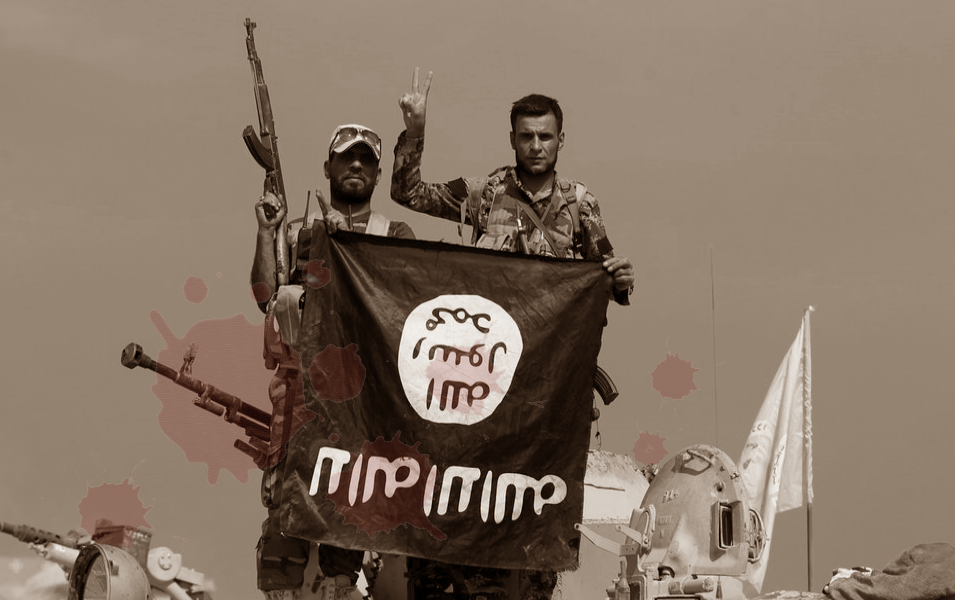
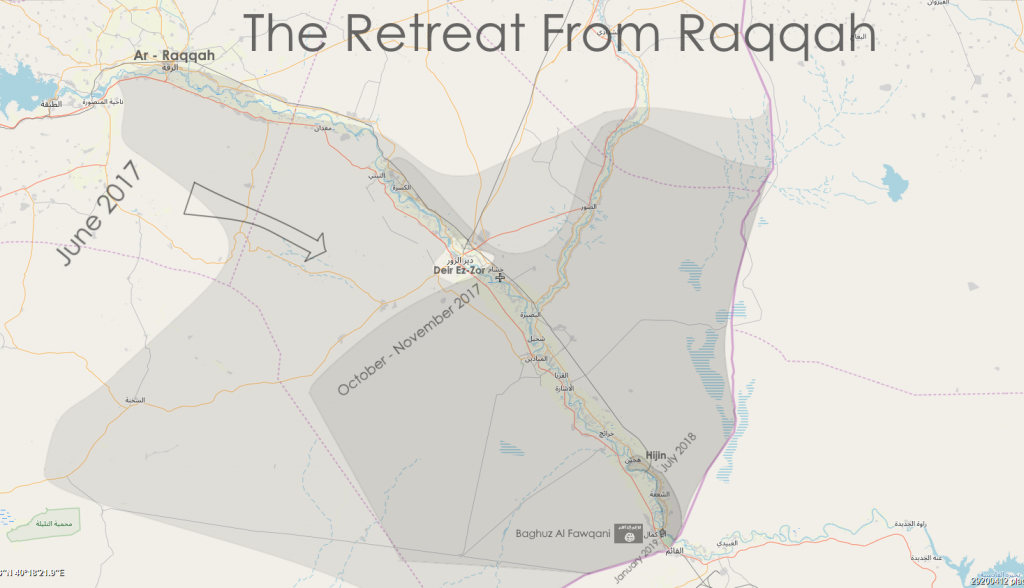
After over a year since the decisive loss of Raqqah, and the slow protracted loss of territory of the militant group. A media frenzy now descends on Al-Baghouz Fawqani AR: الباغوز فوقاني. The town, with a prewar population of just over 10,000 and situated on the banks of the Euphrates. Quickly it is becoming known as the last stand for the die-hard militants.
The large number of civilians are evident by the tents that new sprawl across the southern end of the town. The complexity of the final battle will now be shaped by hearts and minds. Hundreds, if not thousands may well be contained in a camp measuring only a few hundred square meters.
Those who will eventually be forced leave the camps, will be sent to makeshift screening centres run by mainly the Syrian Democratic Forces (SDF). Then, they are likely to travel further inwards towards Hasakah and those suspected of supporting Daesh could be held for an indefinite period of time.
At the time of writing, the only area populated area that Daesh control in Syria is equivalent to a number of tents that have popped up, due to the fact that it’s supporters now have nowhere to run.
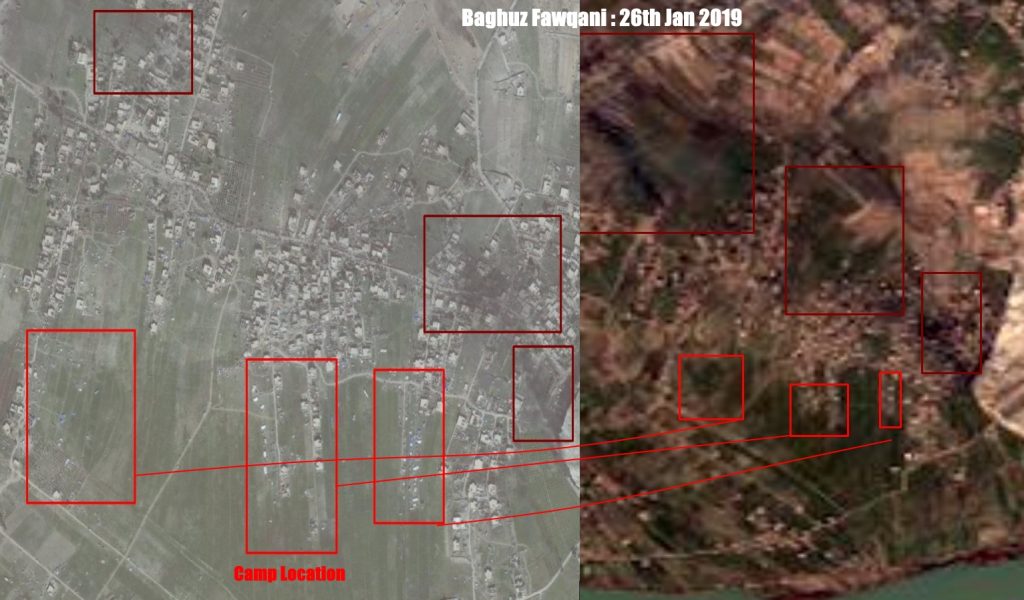
Source: DigitalGlobe
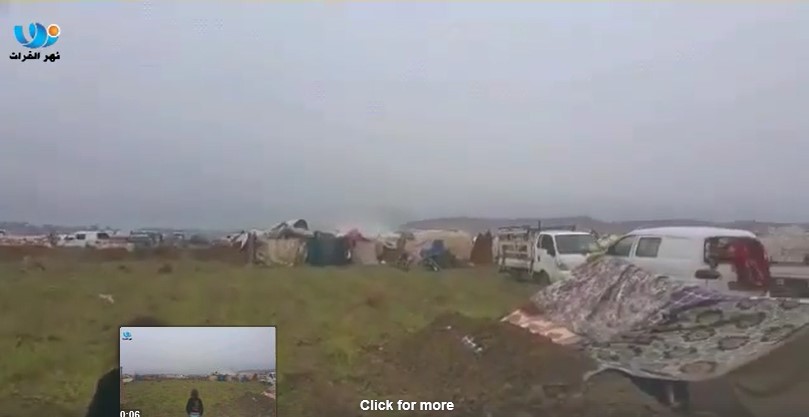
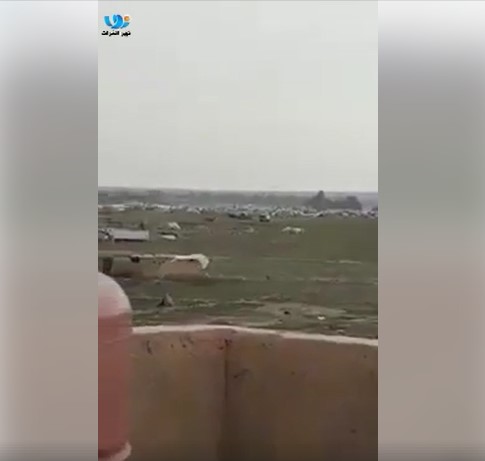
The presence of a large number of pro-Daesh civilians, including wives and children and even fighters from across the Levant and beyond will cause a real headache for the liberators.
Surviving foreign fighters are in a legal ‘grey zone’ and will be held by the SDF. While it’s possible that intelligence services do have contact with the SDF, there is already opposition in home countries to allowing those supporters of Daesh back into their respected countries.
Ever since Daesh lost the city of Ar-Raqqah, the militant group have been losing key ground and support zones. Their crippled protostate is now likely to reform into an insurgency once more.
The Upper Hand

The existence of Daesh has brought about many new complex and integrate tools for carrying out their Jihad related activities. From militarized drones to private Telegram channels and the undeniable rush of foreign fighters to their cause. In retrospect, we have never, ever witnessed anything remotely comparable to the rise of Daesh. From Marawi to Mosul, Al-Qaeda pales in comparison. Throughout this article, we will also brush upon the innovations, and how the militants foes now have the upper hand.
The number of foreign nationals, especially from the West, traveling to Syria and Iraq has tapped off in recent years. Despite the mass-market availability of end-to-end encrypted messengers, it is becoming increasingly harder for supporters in the West to travel to Jihadist control zones. Local intelligence is becoming ever more sophisticated. Take, for example Safaa Boular, a London teen come Daesh supporter. She was fooled by intelligence officers, and eventually became motivated to carry out terror attacks in the United Kingdom, and not travelling to Syria, as originally planned, which lead to her arrest by police.
It was a security services officer, posing as an IS commander, who told Boular that Hussain had been killed in a drone attack.
[source]
The recent media storm regarding Shamima Begum, another teen, who this time did succeed travelling to Syria. She still has undeniable pro-Daesh sentiment, speaks of the antics that the terror group employed on local residents, some of it she herself took part in and supported. [source]
Indeed, the psychological pull factor that Daesh once had is non-existant in the present times. The safe haven of civil life in Raqqah or Mosil has been replaced by the rocky life of desert insurgency, ever on the move to evade capture.
As predicted, we are unlikely to see anything on the same level as the ‘Nürnberg Trials’ for those involved in Daesh’s crimes. Such as the ability to evade capture, and maintain freedom of movement through popular support. Baghdadi knows this too well, and is already far away from events unfolding along the Euphrates.
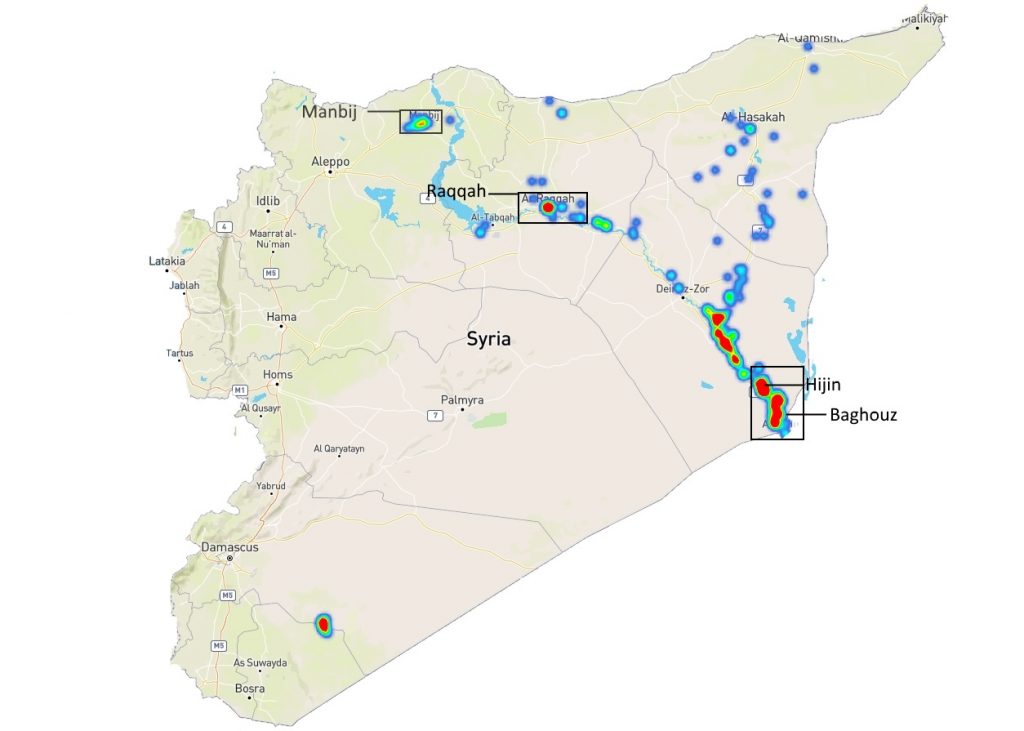
Map of Syria depicting official Daesh ‘Amaq News’ statements and locations. [source]
Not only is it becoming increasingly difficult to join Daesh, their propaganda arm is also suffering, along with the loss of control zones. We are gradually seeing propaganda revert back to an insurgent level. The map above shows Amaq news activity from October 2018 to January 2019. Red shades show increased media activity. Notice the high activity around Manbij where Daesh undertook a deadly attack against U.S. personnel this January. [source]
Poisoned Minds
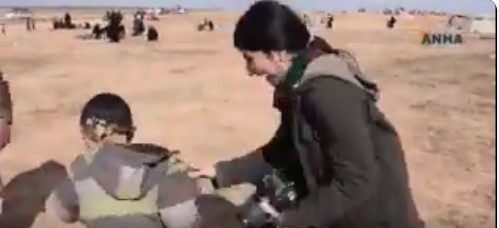
With children, refusing to acknowledge unveiled women, indoctrinated for years under the black standard. It’s hard to see how such ideology can be defeated with limited resources. Current resentments and lack of social improvements will continue to float around in Syria and Iraq. Winning back hearts and minds will be a difficult process in the current climate.
In sum the whole battle against Daesh is a societal battle as much as it is a military one. Education and social norms need to be defended, otherwise we are likely to see more violence.
There is the lingering threat that Daesh will simply reform, form sleeper cells and continue it’s insurgency. Outside of the Levant, one of it’s franchises in Nigeria or Somalia might suddenly gain strength. The fluidity of trans-national jihadism and the relevant ideology make such groups very hard to completely defeat.
Through a realist lens we can look at the whole ‘War on Terror’ as a simple ‘whack a mole’ game, with no lasting victories in the effort to stamp out jihadism, and countless resources used up. In Syria the effort to remove Daesh from the battlefield was de facto successful, albeit incredibly disjointed, with regional and international power struggles over who claims the groups’ former territory.
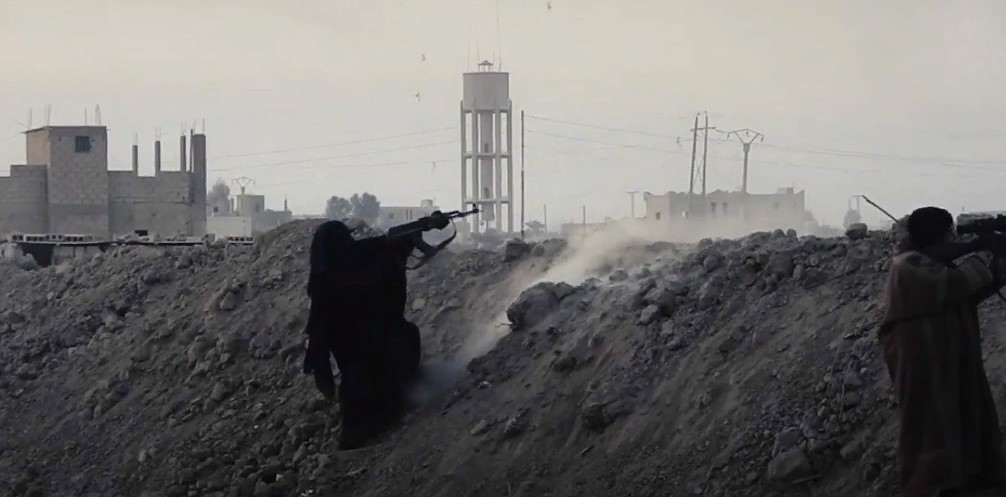
The dilemma of integration is far from over. In post – Daesh Syria, their ideas are now planted firmly within it’s next generation, it’s legacy will continue regardless of the situation on the ground. For if states should take in Daesh supporters, an important moral discourse is already being shaped. Nevertheless, one would be foolish to think the ideology has been wiped from their minds.
Further Reading : Rivers of War: The Euphrates and the Tigris